


Irish Sea Moss
Customer
Customer
Customer

4.9 stars | 10,000+ daily users

Irish Sea Moss

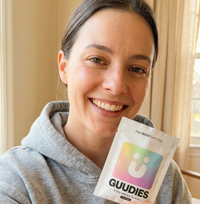
40mg of 50:1 concentrated extract per serving, equivalent to 2,000mg of raw sea moss. Wild harvested from the cold North Atlantic, naturally rich in iodine, magnesium, potassium and trace minerals. Inside the Sea Moss gummy, one of six in your daily GUUDIES pouch.

Start your GUUDIES Journey
our 30 day money back guarantee

What Is Irish Sea Moss?

Irish sea moss (scientific name Chondrus crispus) is a red seaweed that grows on rocky North Atlantic coasts. It's been used as a food and traditional remedy in Ireland for centuries, particularly during the great famine when it was harvested as an emergency source of nutrition. The Caribbean equivalent (often called Jamaican sea moss) is a closely related species (Eucheuma cottonii) and is used in the same ways.

What makes sea moss interesting nutritionally is its natural mineral density. It accumulates iodine, magnesium, potassium, calcium and a range of trace minerals from seawater. Iodine in particular is meaningful because UK dietary intake has dropped over the last few decades (we don't iodise our salt the way many other countries do). The thyroid needs iodine to make hormones that regulate metabolism, body temperature and energy.

You'll see sea moss marketed everywhere as containing 92 of the 102 minerals your body needs. That figure is folk wisdom, not a scientifically established analysis. What sea moss does contain is genuinely useful, just not quite as miraculous as some marketing suggests.

Sea moss also contains carrageenan (a natural polysaccharide), which is what gives it its gelling property and is partly why it's been used traditionally for sore throats and digestive complaints. The carrageenan in whole sea moss is different from the highly processed food additive of the same name, which has had some negative press over the years.

We use a 50:1 concentrated extract of wild Atlantic Chondrus crispus, encapsulated in the Sea Moss gummy. One gummy a day, alongside the other five in your daily mini pouch.

Chondrus The scientific name, Chondrus crispus

Irish sea moss is the common name for Chondrus crispus, a red seaweed that grows on the rocky Atlantic coasts of Ireland, Scotland and parts of North America. It's the original sea moss used in traditional Irish remedies.

50:1 Extract concentration

Raw sea moss has the right ingredients but in modest amounts per gram. A 50:1 extract takes 50g of raw sea moss and concentrates it down to 1g of finished extract, so the active mineral content per serving is significantly higher.

Wild Atlantic harvested, not pool farmed

Cheaper sea moss products often come from pool aquaculture in warm Caribbean and Asian waters. Wild Atlantic sea moss grows in colder, more nutrient dense water and typically contains higher mineral concentrations.

What Sea Moss Actually Does

Sea moss isn't a magic bullet. It's a dense natural source of several minerals that tend to be undersupplied in modern diets, particularly iodine. The benefits show up gradually with consistent daily intake, mostly in the form of subtle improvements people don't always notice consciously: steadier energy, better thyroid function on blood tests, less of the muscle cramping that comes with low magnesium and potassium.

If you've got a thyroid condition (either over or underactive), check with your GP before adding any iodine source. For most healthy adults, the dose in our gummy is conservative and well within safe iodine intake ranges.

Thyroid Iodine for thyroid hormone production

Sea moss is naturally rich in iodine. Your thyroid needs iodine to make T3 and T4, the hormones that regulate metabolism, energy and body temperature. Low iodine status is more common in the UK than people realise.

Minerals Magnesium, potassium, calcium

Beyond iodine, sea moss contributes meaningful amounts of magnesium (relaxation and sleep), potassium (electrolyte balance, blood pressure) and calcium (bones and muscle function), in a whole food form.

Trace Sulphur, selenium and others

Sea moss also contains smaller amounts of sulphur (important for skin and connective tissue), selenium (immune and thyroid support) and a range of other trace minerals that are hard to get from typical Western diets.

Whole food Minerals in their natural matrix

Sea moss delivers minerals as part of a whole food matrix, not as isolated chemical compounds. This can mean better tolerance and absorption compared to taking the same minerals as separate synthesised supplements.

Irish Sea Moss Questions

What people ask before they try it.

How much sea moss is in each serving?

40mg of 50:1 concentrated Irish sea moss extract, equivalent to 2,000mg of raw sea moss. Inside the Sea Moss gummy, which is one of six gummies in your daily GUUDIES mini pouch.

Is this the same as Caribbean sea moss?

Closely related but not identical. Irish sea moss is Chondrus crispus, a cold water Atlantic species. Caribbean sea moss is usually Eucheuma cottonii, a warm water species. Both are used in similar ways, both contain iodine and minerals, but the Atlantic species typically grows in more mineral dense water.

Does it really contain 92 minerals?

No, that figure is folk wisdom that's been repeated for years without solid scientific backing. What sea moss does contain is genuinely useful: meaningful iodine, magnesium, potassium, calcium, plus trace amounts of selenium, sulphur and other minerals. We don't need to oversell it.

Can I take it with thyroid medication?

Check with your GP first. The iodine in sea moss is meaningful and can interact with thyroid medication, particularly levothyroxine for hypothyroidism, or treatments for hyperthyroidism. Individual guidance from your prescriber is the safe approach.

Ready to try it?

Join 1,000+ people already feeling GUUD.

Claim My Free Trial

£0.00 today · Just £3.95 shipping · No subscription